ONE EPISODE, A STARTING POINT

The WHOLE truth about the future of WORK

51:59Marco Montemagno · podcast RSS

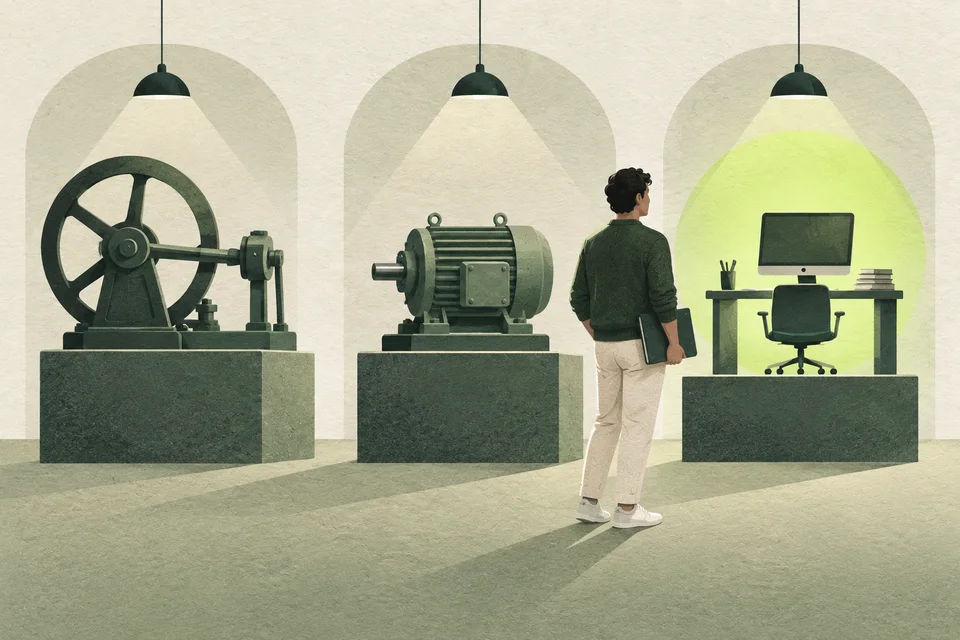
The episode reconstructs the relationship between technology and work through history, psychology and future scenarios. Marco starts with the power of narratives: stories and films can establish fears that resist evidence. He then offers a popular account of industrialization, electricity, computers and the internet, arguing that these transformations expanded opportunities and quality of life. Collective progress does not remove the cost borne by people losing an occupation or business. Examples of reduced professions introduce the speed of AI and robotics. Marco sees possible major benefits alongside concentration of power, loss of control and employment difficulties. He offers no certain forecast: the historical, economic and technological claims belong to his account and have not been checked by this summary. The closing section focuses on social responses. Retraining takes time, work contributes to identity and individual responsibility alone is insufficient. He calls for institutions to rethink support and safety nets, discusses universal income as a possibility and stresses education available to everyone. His final stance is to prepare for risks while remaining open to opportunities, seeking to understand and use tools rather than relying on slogans.

BEFORE YOU PRESS PLAY

What is discussed

AskMonty AI editorial noteSource consulted:

The episode reconstructs the relationship between technology and work through history, psychology and future scenarios. Marco starts with the power of narratives: stories and films can establish fears that resist evidence. He then offers a popular account of industrialization, electricity, computers and the internet, arguing that these transformations expanded opportunities and quality of life. Collective progress does not remove the cost borne by people losing an occupation or business. Examples of reduced professions introduce the speed of AI and robotics. Marco sees possible major benefits alongside concentration of power, loss of control and employment difficulties. He offers no certain forecast: the historical, economic and technological claims belong to his account and have not been checked by this summary. The closing section focuses on social responses. Retraining takes time, work contributes to identity and individual responsibility alone is insufficient. He calls for institutions to rethink support and safety nets, discusses universal income as a possibility and stresses education available to everyone. His final stance is to prepare for risks while remaining open to opportunities, seeking to understand and use tools rather than relying on slogans.

Key points

  • Stories shape how we interpret technology, particularly through fear.
  • The historical account moves from steam and electricity to computers and connectivity.
  • Collective improvements are set alongside the costs of employment transitions.
  • Optimistic and negative scenarios remain open, without a certain outcome.
  • Change involves financial support, identity and social organization.
  • Widespread education and safety nets are central demands from the speaker.
Open the source: TUTTA la Verità sul Futuro del LAVORO

Words to decode

Full dictionary

2glossary expressions documented here

Each expression counts once per item, even when repeated. The overall ranking covers the reviewed portion of the archive.

Open a symbol to discover its meaning. Checked against the source material. View source

Belin!

A Ligurian exclamation with a vulgar origin, used to add surprise, emphasis or exasperation.

Across the reviewed archive: 139 items
#4 in the ranking

Dictionary entry
The bald jokes

The hair and shampoo jokes are part of his self-deprecating humour about being bald.

Across the reviewed archive: 143 items
#3 in the ranking

Dictionary entry

SWITCH GEARS. GET CURIOUS.

Reality has a sense of humour.

30 seconds. A different perspective.